
AI and creativity in content marketing
Much has been said about generative AI’s role in the creative process.
In my opinion, artificial intelligence can’t be creative in itself. However, there are ways to work with AI in content marketing to enhance, not replace, creativity.

AI and Creativity
AI engines writing and creating artworks is controversial for several reasons. Artists, rightly, protest about their work being scraped for these tools without credit or royalties. And the boundaries of what it means to be creative have been tested. In a world where every app now has AI capabilities, it’s imperative to draw some boundaries around creative work and determine the place that humans should be valued.

It’s important to note that not all apps have embraced AI. For example, my favourite iPad art app Procreate took a stand against generative AI.
In their words, “Creativity is made, not generated.” This is appealing to me as a creative, for a tool to hold my human creativity in such high regard.
But generative AI is not going away.

In WordPress VIP’s Content Matters 2024 Report, we found that 46% of respondents are using AI tools to write content.
That might sound alarming, but—hear me out—maybe that’s OK! It really depends on the goal of the content, and how important it is to be creative in that content.
First, some definitions.
Content marketing
A basic definition of content marketing: creating and distributing valuable, relevant, and consistent content to attract and retain a clearly defined audience.

Basically, it’s about making connections with your audience through content, that will attract and retain them as customers.
The main goal of content marketing is to grow your business by providing value to customers, making them smarter and better at their job to build trust in your brand.
Purposeful connections
Put another way, our job as content marketers is to make purposeful, meaningful connections with our audience. We want to give them value, and connect with them as they explore our product, make a purchase, become a user, and, hopefully, an advocate.
When deciding when and how to use AI tools in this process, it’s essential to really understand the goal of your content marketing.
Creativity
”Creativity” is a very broad term. But the way I see it, creativity is about filtering inputs through your own unique perspective and experiences, to produce meaningful outputs.
Author Ann Patchett has a great definition of how creativity works:
I am a compost heap, and everything I interact with, every experience I’ve had, gets shoveled onto the heap where it eventually mulches down, is digested and excreted by worms, and rots.
It’s from that rich, dark humus, the combination of what you encountered, what you know and what you’ve forgotten, that ideas start to grow.
—Ann Patchett, This is the Story of a Happy Marriage
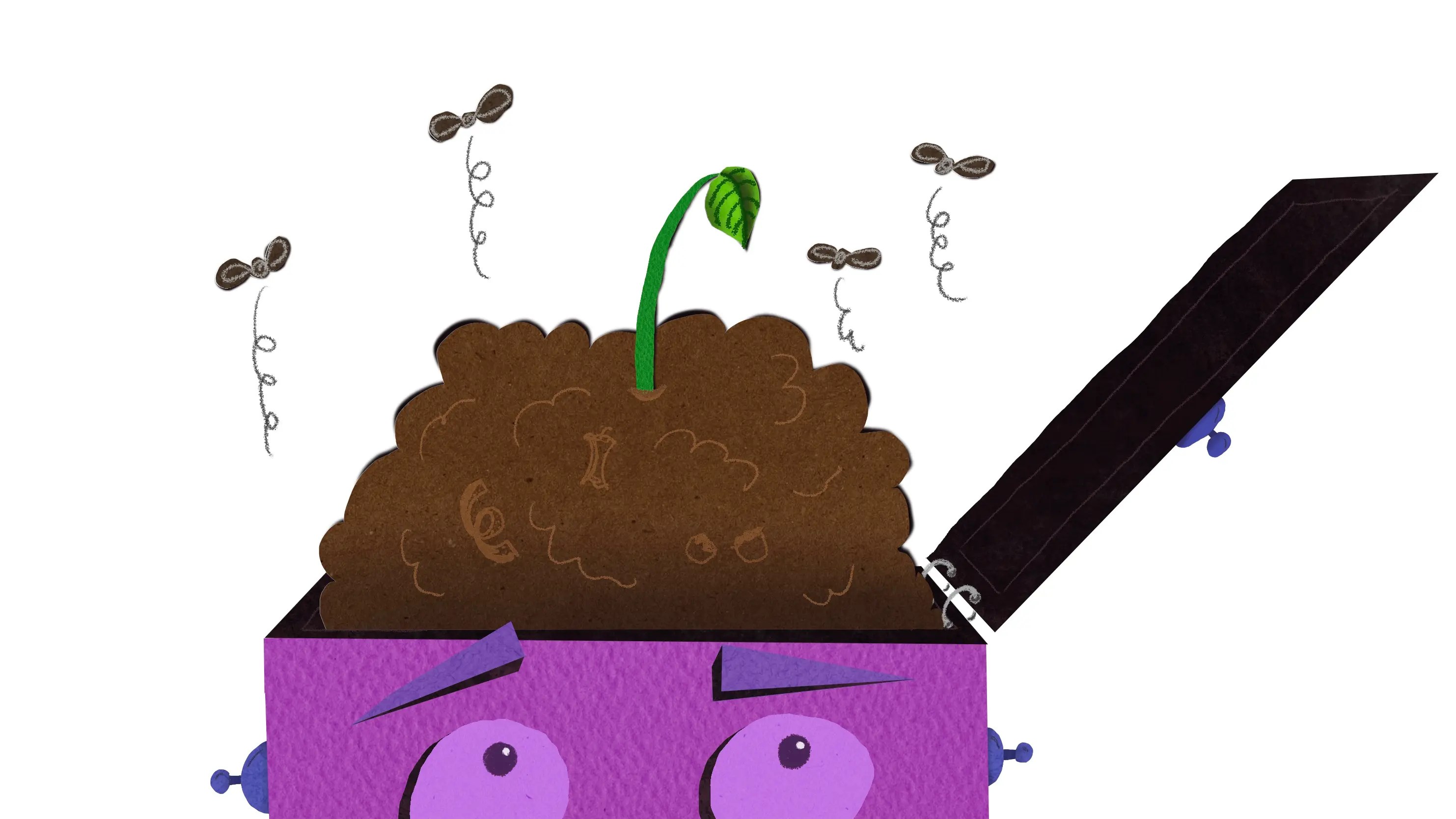
I love this definition because it’s earthy, visceral, and kind of gross. It’s very human, and not what you think about when you think about AI.
Margaret Boden also has a useful framework for thinking about creativity, especially as it accommodates AI. Boden defines three ways in which creativity can happen:
1. Making unfamiliar combinations of familiar ideas
One type of creativity is making unfamiliar combinations of familiar ideas, pulling multiple concepts together in order to create something new.
For example, a comedian might write a joke that juxtaposes two unlikely ideas, making a humorous comparison. It’s possible for AI to throw together infinite combinations of ideas. However, there has to be some meaning in the connection for us to find it funny. A human still needs to determine whether the joke was successful.
2. Exploring the boundaries of conceptual spaces
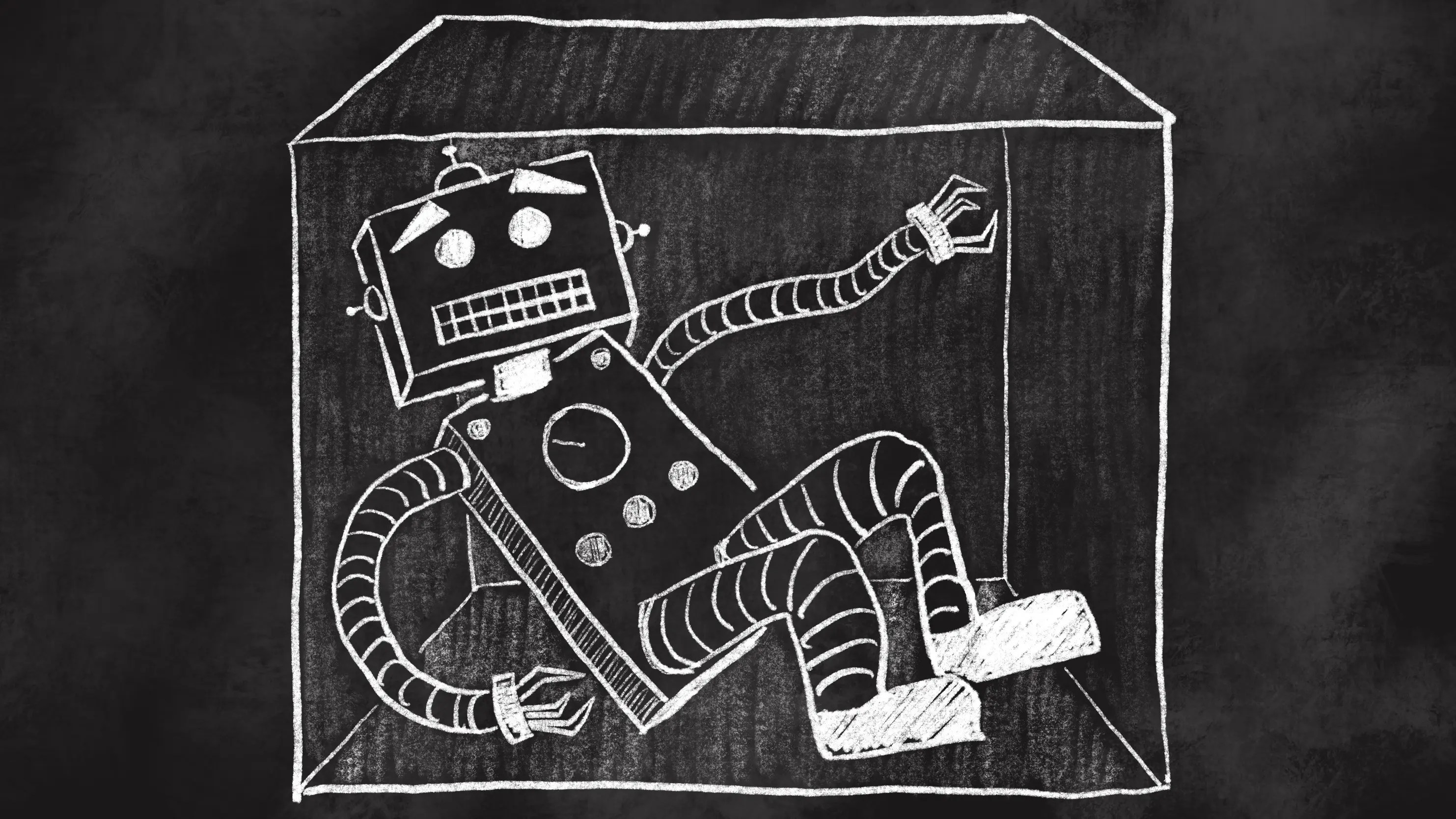
Another type of creativity is exploring the boundaries of conceptual spaces.
Within a given conceptual space, like a style of art or a theory of chemistry, many thoughts are possible, only some of which may have actually been thought.
AI is capable of doing this, to an extent. It can explore its fixed world within human-defined boundaries. But it only knows what a human has told it.
3. Recognising and pushing beyond the limits of these spaces
Boden’s third type of creativity is to recognise the limitations of a conceptual space, and push beyond them.
This is where we go beyond the edge, beyond our own capacity, to actually transform the conceptual space.
AI operates within a certain area, so it can’t go beyond this without human involvement. It can’t push the boundaries and transform an art form, theory, or other conceptual space.
Can AI be creative?
We’re starting to see some of the limits of AI in creativity, and where the human is needed.
AI in content marketing
When thinking about where and when to use AI in content marketing, it’s helpful to ask: when in this process is human creativity the most important, and when is it the least important?
As creatives, we like to think that we’re always expressing ourselves artistically. But the reality of content marketing—as with many creative professions—is that it’s not really about us. We need to adopt the voice of the business, and provide value on topics that are top of mind for customers.
In this frame, we can ask ourselves: how much does it matter to your audience that something is generated by a human? This question might expose areas in which the human touch has been over-valued in the past. But it also prompts thinking about the proliferation of content on the internet. Do we really want robots generating more content that’s based on other content? Or do we want to focus on the value of content? I know what my answer is!
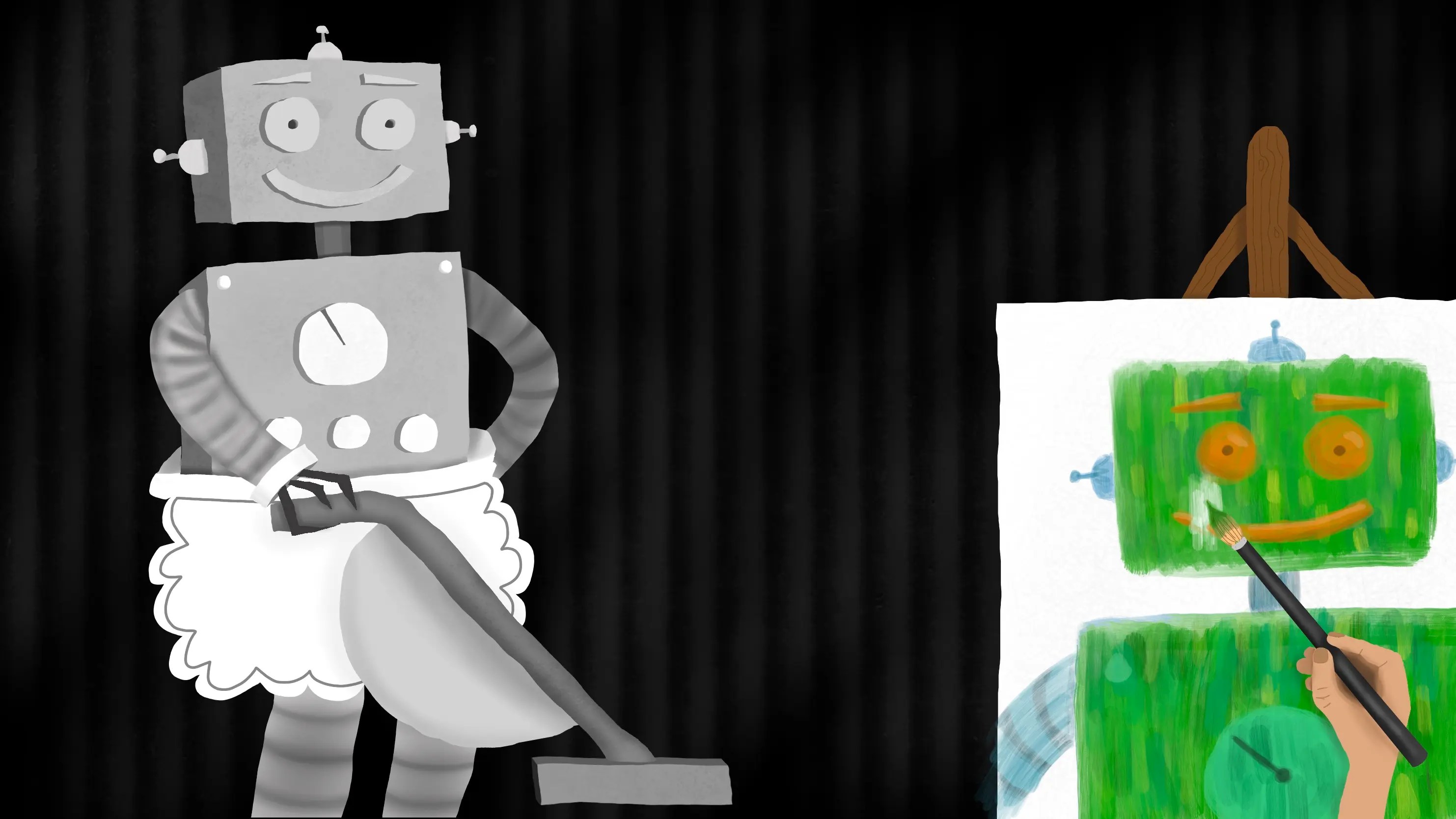
I don’t want to remove the human from the content marketing process, because the humanity of this connection is so important. But, I do want to make us better and more efficient creative humans.
We can use AI to replace the parts of content marketing that are least creative, so we can spend more time on the creative parts.
Rather than the AI doing the art, I want the AI to do the “cooking and cleaning” so I have more time for the art.
The creative process
I’m fascinated by the creative process. In particular, I’m interested in the place where the intentions and inspirations of the creator meet our interpretation and experience as consumers of creativity.
I really miss the DVD commentary track. After I watched the entire movie, I would go back to the special features in the menu and select the audio commentary. Then, I’d watch the whole movie again, but this time while listening to the director, actors, and other crew talking about how the movie was made.
This commentary track, this peek behind the scenes, made me appreciate the film more. Tapping into the struggles, the choices, and the humanity of the process made me connect the work with my own struggles, choices, and humanity.
On that note, let’s explore some of the human characteristics of the creative process that AI can’t replace:
Taste
Taste is essential to creativity. Humans have preferences, and we know what “good” looks like on a very personal level. AI doesn’t have taste, unless that taste has been programmed into it. And in that case, it would be the taste of the programmer.
Messiness
Creativity is about accidents. Humans imperfection is compelling to us as consumers of that creativity. Robots could be programmed to play a perfect game of tennis against each other, but wouldn’t it get boring to watch?
Struggle
Humans experience struggles, and overcome or succumb to these struggles. When a creative work is borne out of struggle, the consumer of that creative work recognises their own struggles in it, forming a powerful human connection. Robots, of course, don’t experience these struggles.
Self-reflection
Only humans are able to reflect on what we’ve created, determine whether it was successful, and make improvements and iterations. AI can’t do this without human intervention.
Joy
Lastly, there is an essential joy in the creative process. Even when we’re being creative for commercial purposes, for example in content marketing, enjoyment is an important aspect of the process. AI doesn’t feel joy. So if there are parts of the creative process that you don’t find joyful, consider using AI for those!
As far as I know, algorithms don’t feel.
Taste, messiness, struggle, self-reflection, and joy are aspects of humanity that make creativity more compelling, and more effective as a means of communication.
Creativity is about being me. No AI is going to be me as well as I can be me.
Overcoming skepticism and embracing AI
I’m definitely still hesitant about AI, especially when it comes to generating art. But I’m recognise that there are ways to work with it in content marketing.
I’ve overcome my own skepticism, and welcomed our robot overlords collaborators.
It all comes down to how you think about the tools. AI is best used as a tool to aid creativity, not to replace the creative person.
A framework for AI tools
Bloomberg’s Roy Bahat breaks AI tools down into three categories:

1. Looms
Tools in this category are those that replace a human, like a fully-automated loom can replace a weaver.
According to Bahat, tech companies have over-indexed on the loom, enamoured with the idea that a robot can be human-like and replace the creative person.
2. Slide rules
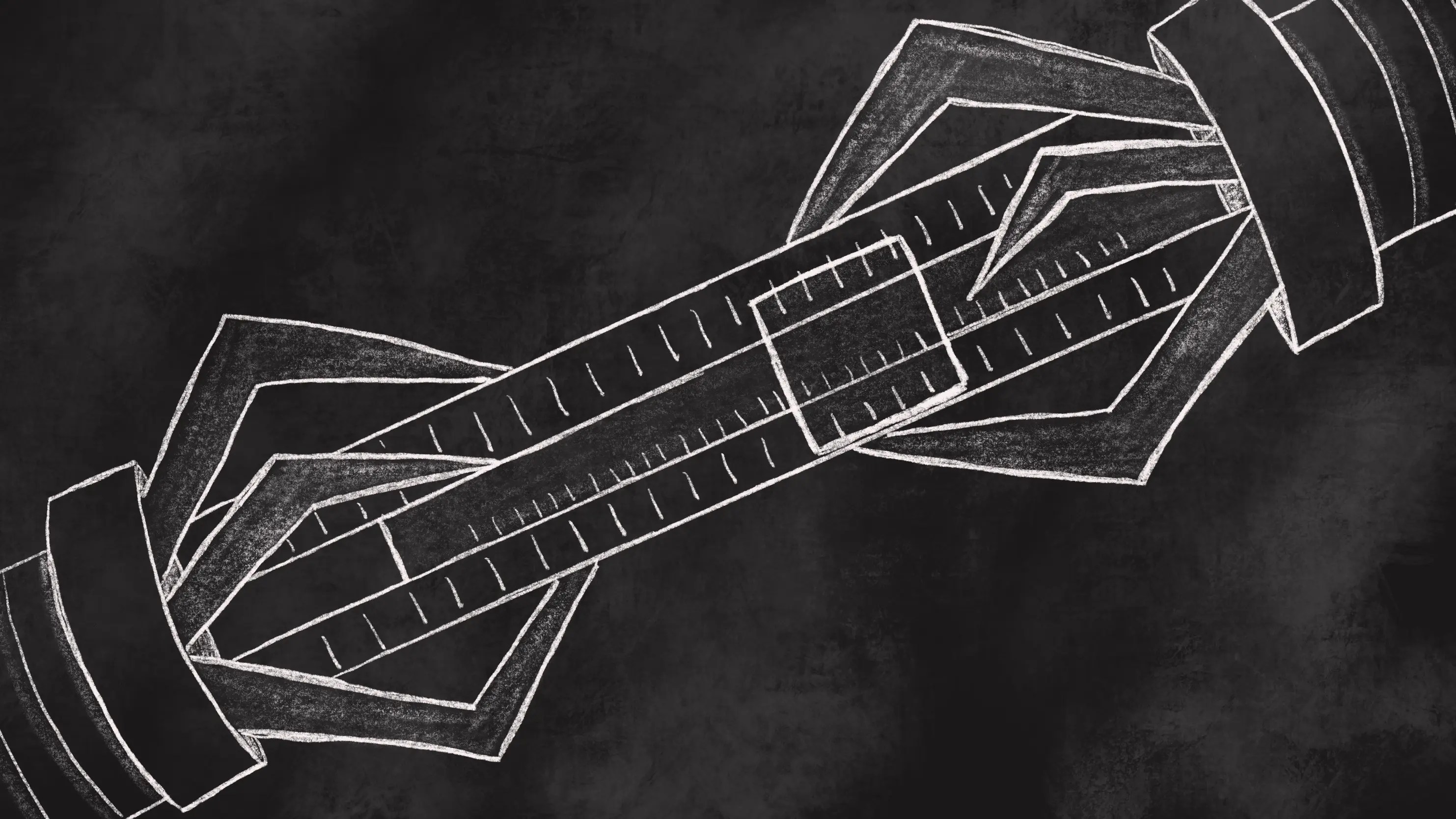
These tools assist a person, like a slide rule makes a calculation faster.
The best AI tools for creativity are slide rules. They can help creatives to do tasks like summarise ideas faster, change the tone of something already written, or fill in a missing background to an image.

3. Cranes
Tools in the “crane” category allow a person to do something that would be otherwise impossible for them to do by themselves.
AI tools can be cranes if they allow us to do something outside of our ability, like translating text into another language (but we’d still need a human to check this work!).
Although most generative AI tools fall into the “loom” category, this is the worst use of AI as far as creativity goes. For example, AI tools that write a first draft or generate an image from scratch. This is a mistake, as the first draft is where you are most connected to your creativity. As Ann Handley puts it:
I am not worried about robots taking our jobs. But I am worried about robots undermining our confidence.
Your first draft is your thinking draft. Don’t outsource your thinking.
According to Bahat, we should be more focussed on AI tools that fall into the “slide rule” and “crane” categories: technology that augments our human capacity rather than tries to replace it.
AI should make us super-powered.
How I use AI
Hopefully by now, I’ve made the point that AI isn’t creative in itself, but it can be useful as a tool in the creative process.
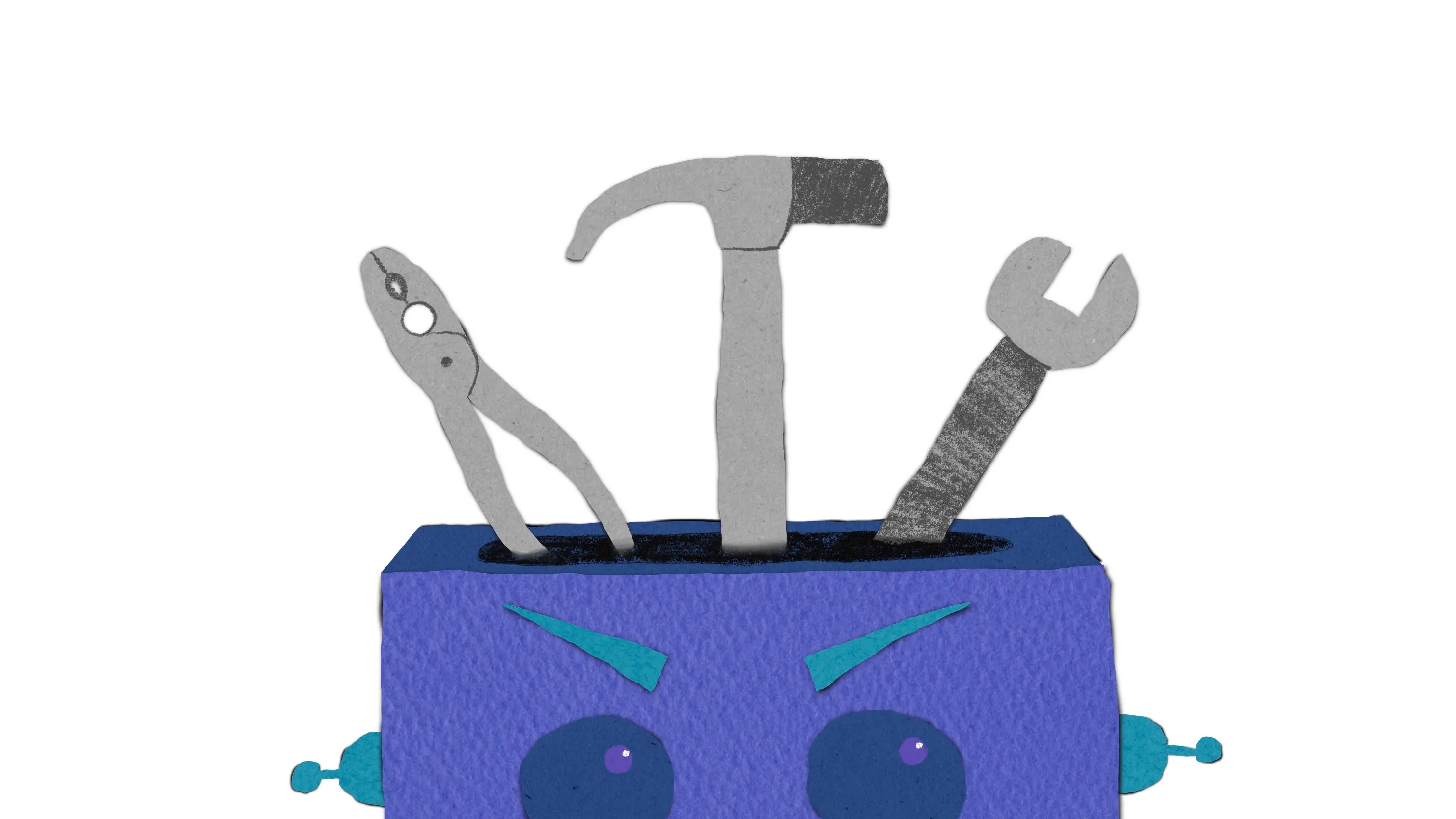
AI is best used when it frees up a human from repetitive or less creative tasks, so we have more time and creativity for the strategy. Involving creatives earlier in the strategic thinking always brings better results than just calling them in at the end to “make it pretty.”
Some ways I, and my team, use AI in content marketing:
Metadata
Once a piece of content is written, AI tools can be used to generate metadata like excerpts, tags, and categories. Writing this metadata is usually busy work for the content marketer, and it’s become significantly easier with AI.
Parse.ly generates an excerpt right in the WordPress editor. Once the post content is in, we just click the “generate” button to get a first draft right in the excerpt meta box. That is often tweaked—again, the human is still needed in the process!—but it gets us a lot of the way there.
Social posts
Once a piece of content is written, AI tools can help generate the derivative copy for social posts in different platforms. This saves a lot of time, as it can pick up on the main ideas of a post, create a post in the required number of characters, add emojis and hashtags, and more. It can also create a series of posts, or anything else within parameters you set.
Internal linking
Linking to other pages or posts on your own site is important for SEO, but it can be one of the most tedious tasks for content marketers. This is where AI can be really helpful, as some tools can scan your site for certain keywords, and suggest related content to link to.
Insights from analytics
AI can be really useful to help connect the dots between content analytics and content strategy. Using Parse.ly, we can get suggestions for headlines, or content topics to write about next, based on what’s performed well for us in the past.
Transcribing & summarising
One of the most time-saving uses of AI is to transcribe and summarise content.
For example, when we have a video or audio recording from an event, we can run this through AI to get a transcription, which (after human checking) can be used for captioning. AI can also use this transcription to generate a summary of the event which can then be crafted into a blog post.
Tone & voice
AI can be very helpful for ensuring content adheres to tone and voice guidelines. There are various AI tools (for example, Writer or Grammarly) that can be trained on verbal guidelines, and flag opportunities to correct things like acronyms, abbreviations, product names (capital P, dangit!), and also suggest rewrites in a different tone.
These uses of AI act as slide rules, to help creatives save time, rather than to replace our creativity.
Balancing AI and human creativity

AI is not creative in its own right. But that’s OK! We shouldn’t want it to replace our human creativity.
We don’t want to outsource our creativity, because that’s the thinking part. The part that brings us joy, humanity, and connection.
But, there are many uses for AI as a tool in the creative process. You can use it to free up your time to be more creative, or to achieve things you couldn’t have done on your own.
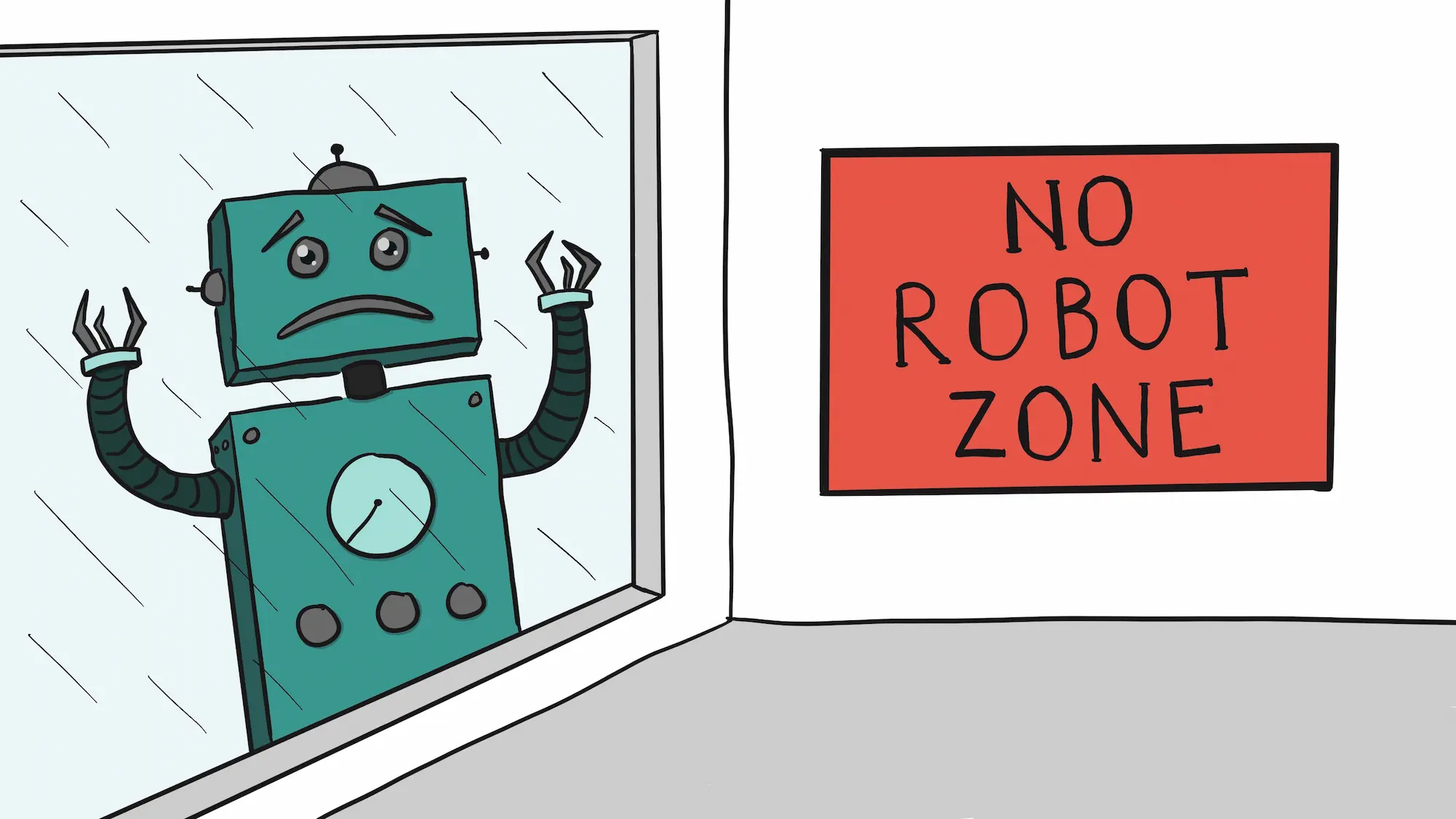
By understanding the goals of your content marketing, and recognising the places where a human touch is irreplaceable, you can figure out the “no robot zones” for you.
This article is based on a talk I gave at WordCamp Sydney 2024, and this previous post: Can AI be Creative?


Leave a Reply