
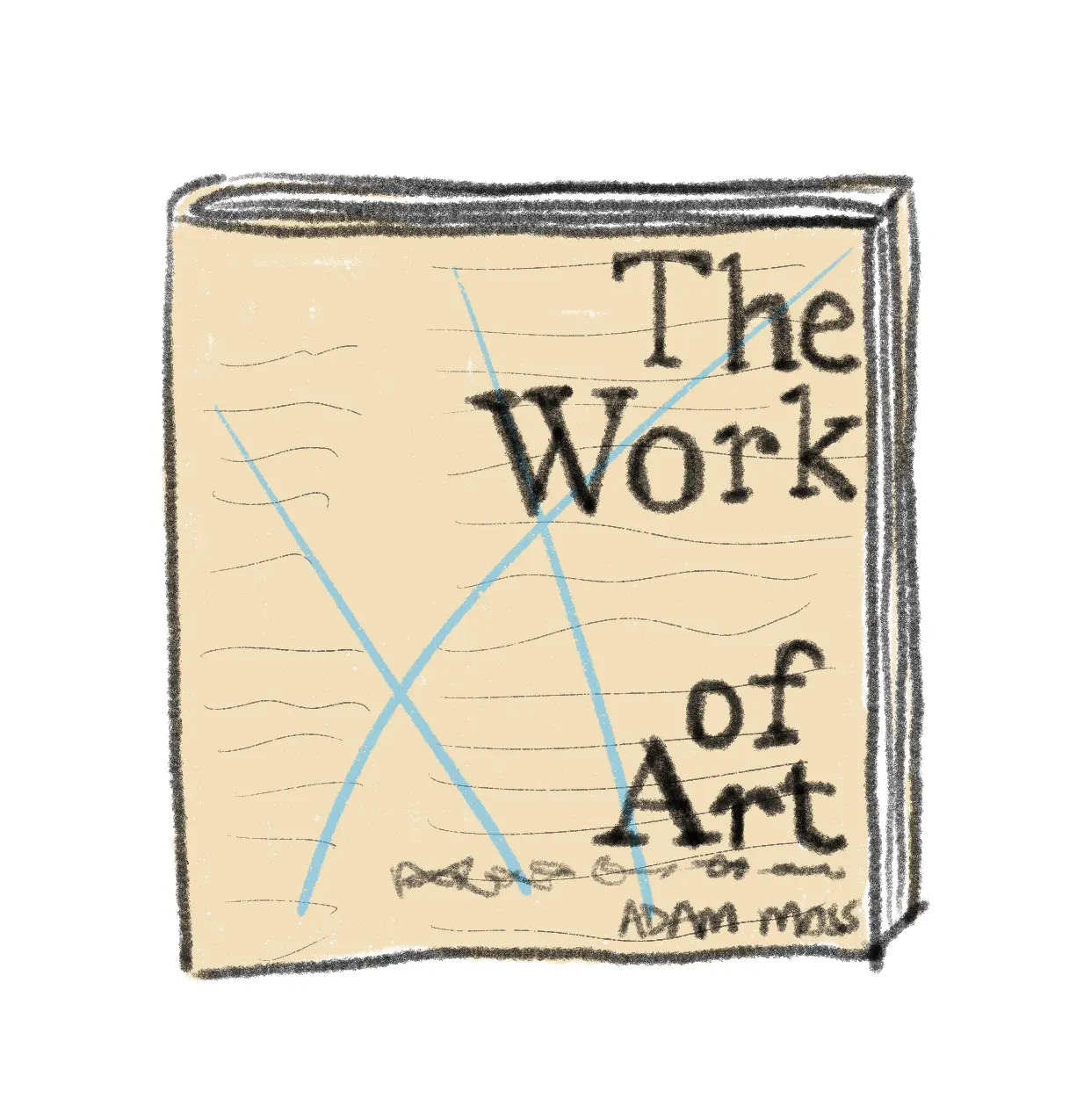
Throughout 2024, I couldn’t avoid hearing about The Work of Art by Adam Moss. Subtitled “How something comes from nothing,” the book is a collection of interviews with creatives across a range of disciplines. Moss, a magazine and newspaper editor, spoke with these creators in an effort to understand the moment of artistic creation. And it seems every creative person I know or follow was talking about this book.
Perhaps we’re all just as interested in the creative process as I am?
Each interview moves between enlightening and mysterious. While the artists in the book often have self-awareness about their process, many of them cannot quite put their finger on what is happening in the moment of artistic creation.
My takeaway: There are as many ways of making art as there are artists. While some themes can be found between the processes of different artists, the exact moment of creation is impossible to describe.
I’ll admit, this brings me some comfort, as there is no one valid, “correct” way to make art. Rather, it’s a matter of investing in learning the skills and building the habits, so that when creating, these tools are readily accessible.
Overall, I’d recommend this book to anyone interested in the artistic process. Below, I’ll go a bit deeper into a few themes that resonated with me.
Taste exceeding ability
One of the most salient themes to me in the book was the idea of the artist’s taste exceeding their ability.
I strongly identified with this feeling, as I am an avid appreciator of art. But, I recognise a great skill of idea and execution in many others’ artworks that is so often elusive in my own.
In short, my taste exceeds my ability.
Perhaps this is a necessary condition for the artist? Perhaps it keeps us making art, keeps us learning and trying (and failing), in pursuit of the most excellent execution of the most incredible idea.
“Will your hand actually do the thing that you have in your mind?”
Michael Cunningham
Successfully realising the idea that’s in your mind is necessary to produce “serious” art, but it is also one of art’s great struggles.
As Ira Glass discusses in his interview in the book, to create art successfully artists need to overcome this hurdle. And they can do this by learning the necessary skills, doing the necessary amount of practice, showing their work, and persevering.
It’s only by making a volume of work that you’ll be forced to confront what it is that you don’t know how to do, and learn to do it.
Ira Glass
Oh, and the other thing is, you need to show your work to other people and have them tell you what they don’t like.”
The mystical middle
From the extensive interviews in the book, Moss concludes that making art has three phases.
Learning skills and assuming habits is the first phase, the “before.” And the practical activity of making the work is the third, the “after.”
But the middle, the second phase, the “hole in the doughnut,” is where the magic happens, the art. It’s a mystical, unconscious thing, and only happens when artists get the before and after phases right.

The duality of art-making
Artists need to let their imaginations run wild, but then at some stage, they need to exercise critical judgement over their work, to make sense of what they have created. Therefore, they exist in two states: laying down the breadcrumbs, and picking them up. There’s a kind of disassociation required between these two ways of being. Artists must let themselves be free, but then immediately turn around and edit their work.
“The only way to get things done is to finish.”
Marc Jacobs
Leave a Reply