
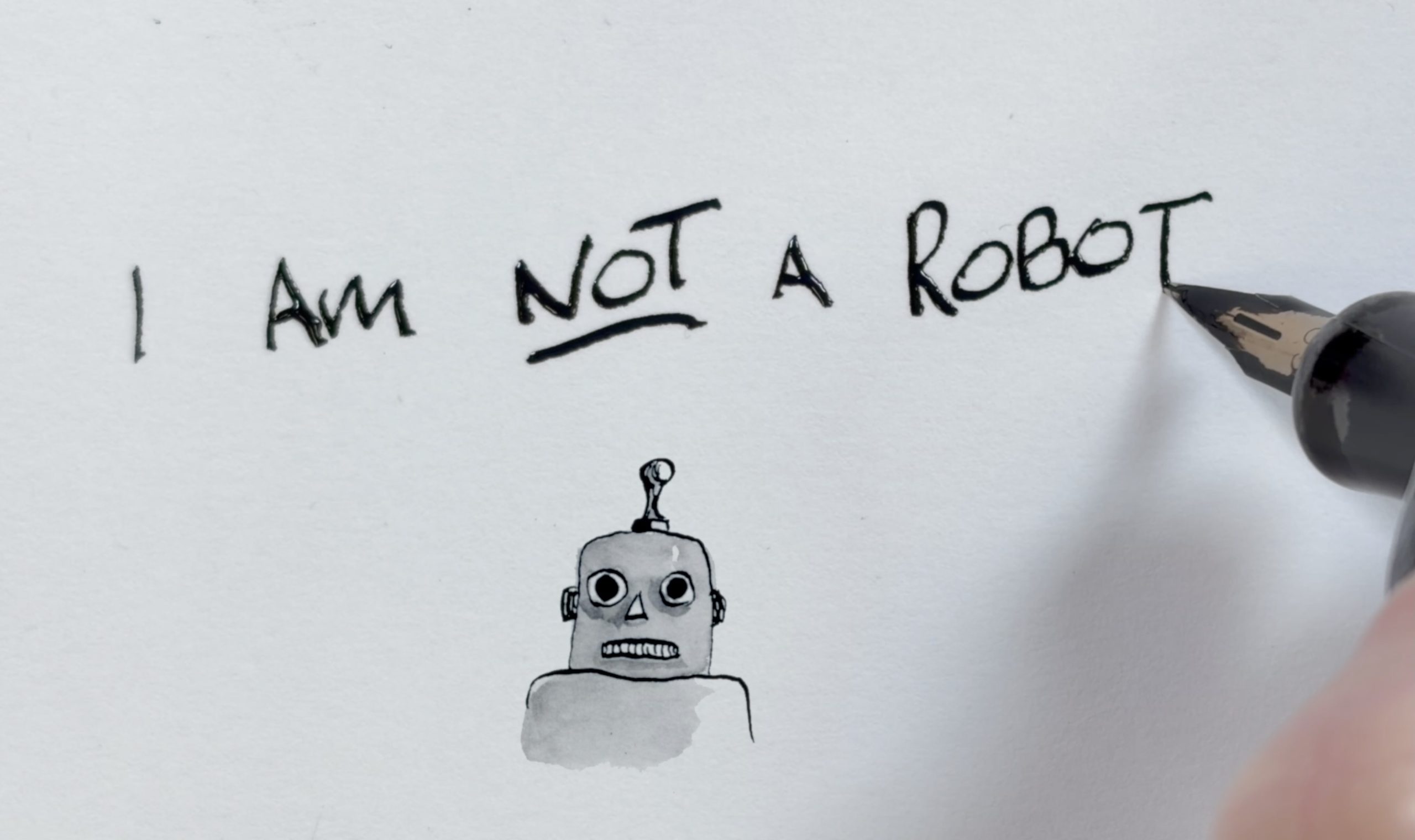
As anyone reading this blog already knows, I have feelings about AI and creativity.
So when we Automatticians were tasked with dropping everything and spending a month in pairs building and shipping work (“Radical Speed Month”), the first thing that came to mind was to explore this topic further. I suspect there are a lot of creators out there who feel the same way I do — sceptical, but curious — and I want to meet them where they are.
I reached out to my colleague Jamie Marsland for help bringing this idea to life. Jamie suggested that he give me a series of creative tasks to complete, primarily using AI.
Gulp.
Pushing myself out of my comfort zone is the point, but just to remind myself of where I stand, we’re calling it I Am Not a Robot.

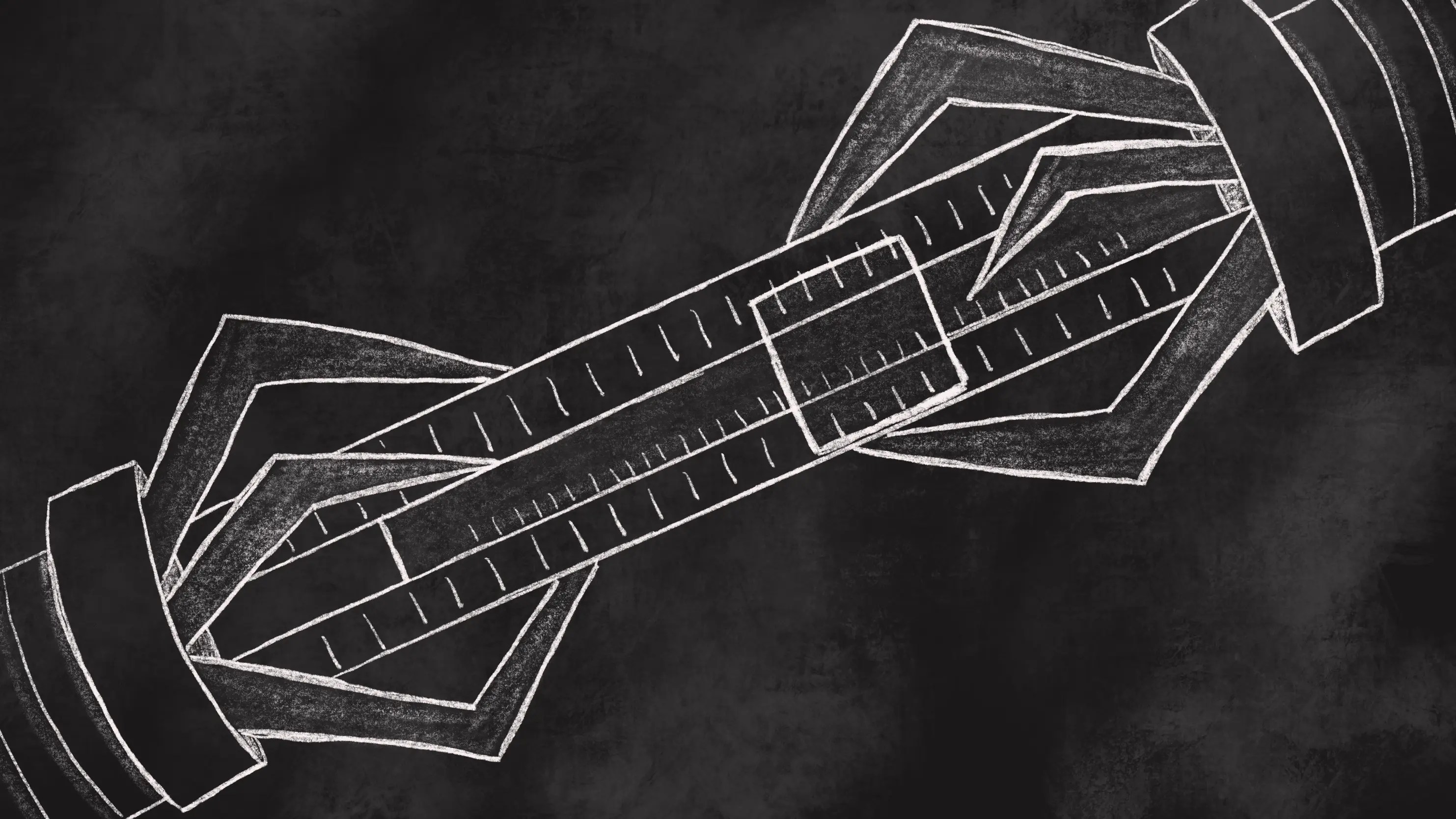

Looms, slide rules, and cranes
A quick side note: here’s a useful framing of AI tools.
Bloomberg’s Roy Bahat breaks these tools down into three categories: looms (which replace a human), slide rules (which assist a human), and cranes (which allow a human to do something otherwise impossible).
Basically, I want more cranes and fewer looms.
OK, on with the project.
The first challenge
Jamie’s brief was:
Create a short film (under 60 seconds) set in 1950, in which a character discovers artificial intelligence 70 years before anyone else, hidden inside an everyday object such as an old typewriter. Focus on the personal experience of that discovery and what unfolds from it — exploring what problems they try to solve, what shortcuts they take, and what doors it opens. All elements, including script, visuals, voices, and music, should be created using AI.
I spent about US$55 and five days making a 36-second film called The Network. I used Claude heavily for scripting and prompt engineering. Midjourney generated the images. Kling handled video animation. A touch of ElevenLabs for voice. I used a human-generated score from freetouse.com (going against the brief, oops!). I edited it manually in Final Cut Pro, and I also had to do a fair bit of janky text compositing work!
I kept a daily video diary throughout the process, and at the end of the week, I “premiered” the film to Jamie and we talked through everything in more depth.
Here’s the film:
Music track: Majestic by Alegend, Source: https://freetouse.com/music, Copyright Free Music for Video
The reshoot
The same day I finished the first edit of the film, OpenAI released its new image model. So I tested it out, giving it the same prompts I’d used with Midjourney. I then used Kling again to generate video from these images, and created an AI-generated score with Suno.
And here’s the reshot version (now 38 seconds):
What I learned
It’s important to approach with curiosity
I genuinely wanted to test my own assumptions about AI and creative work. I have boundaries around using AI creatively, and this was a chance to interrogate them. I think that’s healthy!
AI resists divergent thinking
These AI tools wanted to produce a finished product, fast. It could be frustrating to work on the script with Claude, because it didn’t want to sit in the messy divergent stage of the creative process. There’s not much back-and-forth or clarifying with image and video generation. This jives with my previous ideas about where AI sits in the creative process (AKA “Jaws’ Law”).
AI still has a long way to go
I was relieved at how bad AI was at a lot of this creative work. While the ideation and scripting process with Claude genuinely felt collaborative at times, the image and video generation phases started to show cracks. And the editing process was very manual. I (not-so-secretly) delighted that my creativity in these areas remained intact.
But the tech is moving rapidly
For the reshoot, OpenAI’s new image model handled text rendering and continuity between shots — my two biggest frustrations with Midjourney — significantly better. I was impressed, and I’ll admit, a little unsettled. The fact that two significant creative limitations were resolved by a single model update is both exciting and kind of terrifying. The reasons not to use AI are dissolving faster than I expected.
Will AI tools democratise software creation?
I can’t stop thinking about a recent episode of The New York Times’ The Daily podcast, in which reporter Clive Thompson compared the explosion of AI-generated software to the sudden proliferation of paper and, later, word processors:
…in the 1980s and 1990s, the Macintosh said, OK, anyone can make a document. And suddenly, people are creating really ugly flyers for their birthdays and zines and whatnot and this weird explosion. And if you’d said to someone in 1983 what exactly is this word processor going to do, you would not have predicted “Riot Grrrl” zines in 1996, right.
What weird and special things will happen when software and creative production is in the hands of more people?
Up next
Read about task 2: my experience vibe-coding a WordPress plugin.


Leave a Reply