
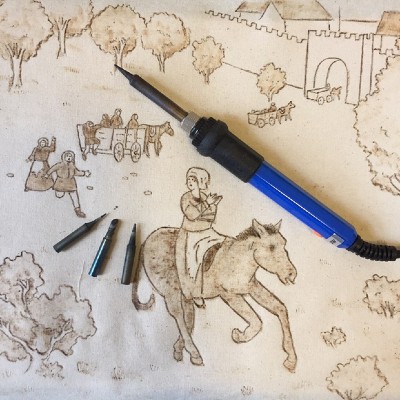
Reading The Dancing Plague by Gareth Brookes, I’m entranced. The book, about the 1518 “dancing plague” in which a sudden compulsion to dance spread like a contagion, is amazing and absurd. The illustrations, a combination of pyrography and embroidery, are wondrous. Masterful.


The amount of work and skill in every page is evident, as I can see every stitch and every burn mark. I know how much time and craft go into graphic storytelling, and into handmade art like embroidery.
Then I came across this article, which gives a behind-the-scenes look at the book’s production. In the post, Brookes says about the pyrography tools he used:
“I never once during the drawing of the book felt like I’d really mastered their operation, but this kept me interested.”
It was surprising to read this. He says he hasn’t “mastered” the tools. But — he made an entire book using them. This book was published, promoted, purchased, and reviewed.
If that isn’t “mastery,” then what is?
Who decides what makes a “master”?
Do you put in the requisite 10,000 hours and then the patron saint of mastery descends from the heavens and bestows it upon you?
(Well, no, of course not, and Malcolm Gladwell himself has discussed the importance of those hours being deliberate, quality practice.)
Maybe you’ve “mastered” a medium when you’ve become good enough at it to adequately express your creative vision.
Or maybe, it’s actually better to avoid mastery. To maintain a beginner’s mindset. To be imperfect, messy. More human.
Featured image from Broken Frontier


Leave a Reply